
Top 10 Micro USB Charging Connectors: A Complete Guide for Mobile Repair Technicians
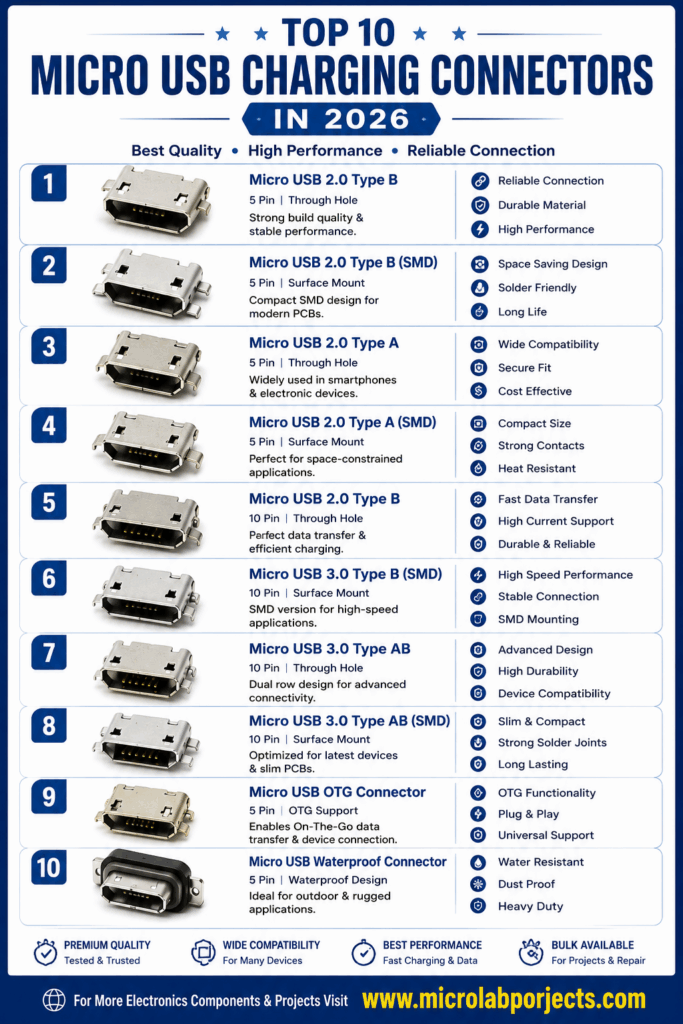
Micro USB charging connectors remain an essential component in 2026, despite the growing popularity of USB Type-C. Millions of smartphones, tablets, Bluetooth speakers, GPS devices, power banks, cameras, and embedded electronic projects still rely on Micro USB ports for charging and data transfer.
For electronics repair professionals, keeping a variety of quality Micro USB connectors in stock is crucial for successful repairs.
The Micro USB 2.0 Type B Through-Hole Connector continues to be one of the most widely used options. Its strong mechanical support makes it ideal for devices that experience frequent cable insertion and removal. The Micro USB 2.0 Type B SMD Connector is another popular choice, offering a compact design suitable for modern smartphones and lightweight electronic boards.
Many repair technicians also use the Micro USB 2.0 Type A Connector, commonly found in specialized electronics and development boards. The Type A SMD version is preferred where space-saving PCB layouts are required without sacrificing electrical performance.
For devices requiring higher data transfer speeds, Micro USB 3.0 Type B Connectors provide additional pins for improved bandwidth. Surface-mount versions of these connectors are commonly used in portable hard drives and advanced mobile accessories. The Micro USB 3.0 Type AB Connector is another versatile option that supports multiple connection modes in compatible hardware.
The Micro USB OTG (On-The-Go) Connector remains valuable for allowing smartphones to communicate directly with USB flash drives, keyboards, and other peripherals. Repair technicians frequently replace damaged OTG connectors in older Android devices still used in industrial and educational environments.
Outdoor electronics often require Waterproof Micro USB Connectors, which include rubber seals and reinforced metal housings to resist dust and moisture. These connectors are commonly used in rugged handheld devices and industrial equipment.
High-quality replacement connectors should feature gold-plated contacts, durable solder pads, precise alignment, and strong metal shells. Inferior connectors may lead to charging interruptions, unstable data transfer, or premature mechanical failure. Selecting reliable components improves repair quality and customer satisfaction.
Although newer devices increasingly use USB Type-C, Micro USB connectors continue to serve millions of active products worldwide. Mobile repair shops, electronics hobbyists, and hardware engineers still depend on dependable replacement connectors for maintenance and restoration projects.
By understanding the different Micro USB connector types and choosing high-quality replacements, technicians can perform longer-lasting repairs while extending the life of countless electronic devices. Investing in premium connectors remains a smart decision for anyone involved in smartphone repair, PCB design, or electronic equipment maintenance in 2026.