
iPhone Repair Starts with Component Knowledge
Introduction
Successful iPhone repair begins with understanding the device’s internal components. Every part inside an iPhone has a specific function, and identifying these components correctly helps technicians diagnose problems quickly and perform repairs with confidence. Whether you are a beginner or an experienced mobile repair professional, component knowledge is the foundation of accurate and reliable repairs.
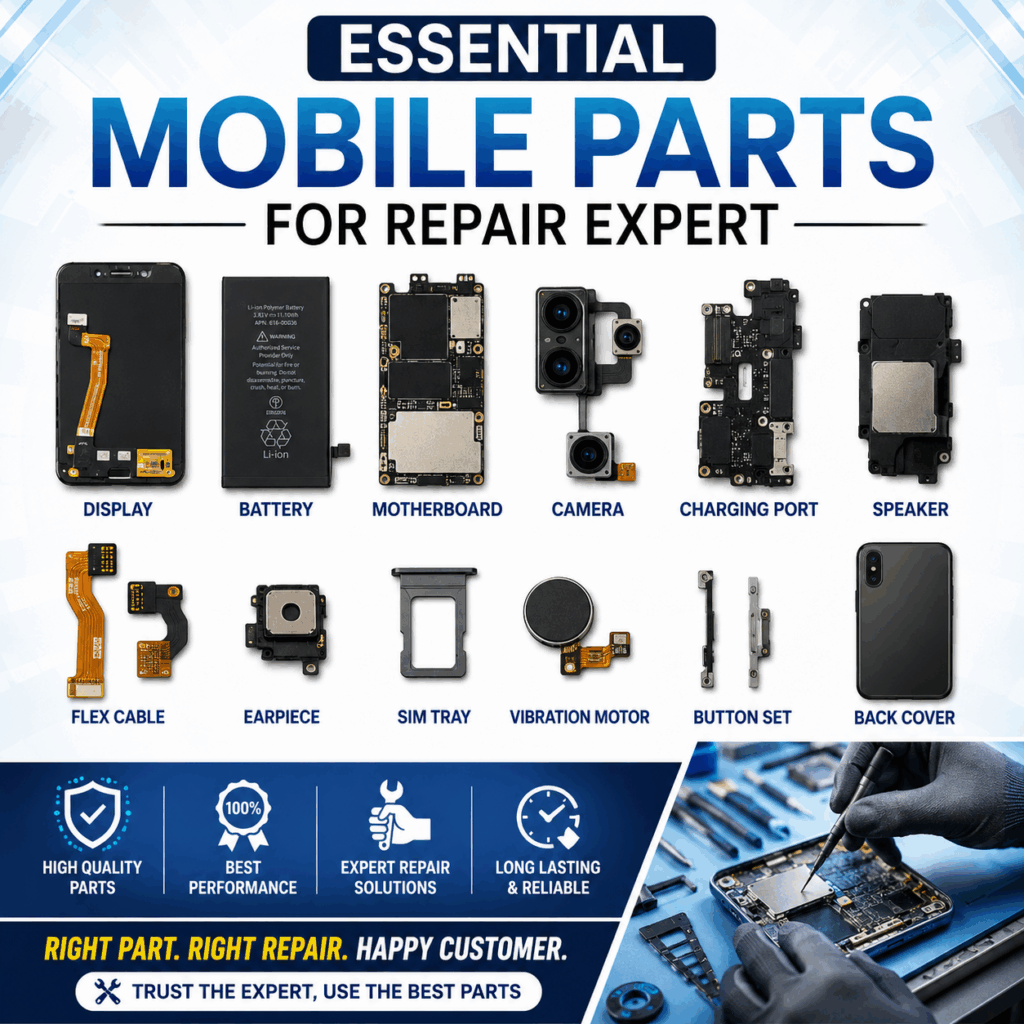
Why Component Knowledge Matters
Many repair mistakes occur because technicians replace the wrong part or misdiagnose the actual problem. Learning the location, function, and connection of each component reduces repair time and improves accuracy. It also minimizes the risk of damaging nearby components during disassembly and installation.
Display Assembly
The display assembly is one of the most frequently replaced iPhone components. It includes the LCD or OLED screen, touch digitizer, and protective glass. Common issues include cracked screens, display flickering, dead pixels, and touch failures. Understanding display connectors and compatibility ensures a successful replacement.
Battery and Power System
The battery supplies power to the entire device. Battery health naturally declines over time, causing shorter battery life, unexpected shutdowns, or charging problems. Repair technicians should also understand the battery connector, charging circuitry, and power management system to identify whether the issue lies with the battery or another component.
Logic Board
The logic board is the heart of the iPhone. It contains the processor, memory chips, storage, power management ICs, and communication circuits. Damage to the logic board can result in boot failures, overheating, no network signal, or complete device failure. Proper diagnosis often requires board-level knowledge and specialized equipment.
Camera Modules
Modern iPhones feature advanced front and rear camera systems. Problems such as blurry images, autofocus failure, black screens, or camera shaking may result from damaged camera modules or loose connectors. Correct identification prevents unnecessary replacement of other components.
Charging Port and Flex Cables
The charging port handles charging and data transfer while several flex cables connect buttons, microphones, antennas, and sensors. Dust, corrosion, or physical damage can interrupt these functions. Understanding each flex cable helps technicians isolate faults efficiently.
Audio Components
Speakers, microphones, earpieces, and audio codec circuits work together to provide clear communication and media playback. If a customer experiences low sound, distorted audio, or microphone failure, technicians should inspect both the hardware components and their connections before replacing parts.
Wireless Communication Components
Wi-Fi antennas, Bluetooth modules, cellular antennas, and SIM card readers allow the iPhone to stay connected. Damage to these components may cause weak signals, dropped connections, or network detection issues. Proper component knowledge makes troubleshooting much easier.
Importance of Using Quality Parts
Even the best repair skills cannot compensate for poor-quality replacement parts. High-quality displays, batteries, charging ports, and other components improve performance, durability, and customer satisfaction. Reliable parts also reduce repeat repairs and build trust with customers.
Essential Tools for Accurate Repairs
Professional repairs require proper tools such as precision screwdrivers, anti-static equipment, plastic opening tools, tweezers, magnification devices, multimeters, and quality soldering equipment for board-level work. Using the right tools protects delicate components and improves repair precision.
Conclusion
Every successful iPhone repair starts with component knowledge. Understanding the purpose, location, and function of each internal part enables faster diagnosis, safer repairs, and better customer service. By combining technical knowledge, quality replacement parts, and professional repair practices, technicians can deliver reliable results while building a strong reputation in the mobile repair industry.